
Sign up for our newsletter and receive a free ebook and access to exclusive content from the world of fashion.
Join our Newsletter receive 🎁
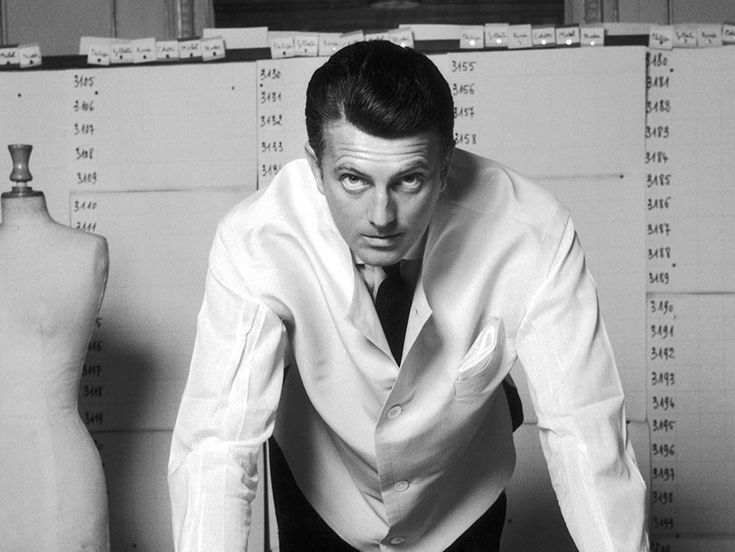
In the ephemeral world of fashion, the name Givenchy remains synonymous with enduring elegance. Hubert de Givenchy was more than just Audrey Hepburn's court tailor; he was an aristocrat with a business vision who understood the power of image and was one of the first to transform Parisian haute couture into a global, diversified luxury empire. His retirement in 1995 marked the end of an era, but the business model he helped create continues to define the industry today.
Born Count Hubert James Marcel Taffin de Givenchy in 1927 in Beauvais, France, he came from a Protestant aristocratic family. This background shaped his innate sense of proportion, restraint and savoir-vivre. Contrary to his family's expectations, which steered him towards law, the 17-year-old Givenchy moved to Paris to study at the École des Beaux-Arts and pursue his passion for fashion.
His talent quickly opened doors to the most important studios. He apprenticed with Jacques Fath, Robert Piguet (where he worked alongside Pierre Balmain and Christian Dior) and Lucien Lelong. However, the five years he spent alongside the eccentric Elsa Schiaparelli proved crucial to his development. It was there, in daily contrast to her surreal provocations, that Givenchy sharpened his own vision, based on clean, almost sculptural lines.
In 1952, at the age of just 25, Givenchy opened his own fashion house on Rue Alfred de Vigny. His debut collection was an instant success and a market breakthrough. Called ‘Les Séparables’, it consisted of luxurious but separate items of clothing – light skirts and elegant blouses.
The most famous design in this collection was the ‘Bettina’ blouse, named after top model Bettina Graziani. Made of simple white canvas (a fabric rarely used in couture at the time), with puffed sleeves decorated with black embroidery, it was a manifesto of modernity. Givenchy democratised luxury by offering women elegance that they could compose themselves.
The turning point in his career and in the history of the brand's image was his meeting with Audrey Hepburn in 1953. The actress was preparing for the film Sabrina and was looking for ‘authentic Parisian clothes’. Their professional relationship quickly turned into a deep friendship, creating the most famous alliance between a musician and a designer in the 20th century. Givenchy dressed her in films (Funny Face, Charade) and in private. The iconic black dress from Breakfast at Tiffany's (1961) became a global benchmark, synonymous with the ‘little black dress’.
However, Givenchy was not only an artist, but also a shrewd strategist. In 1957, he was the first couturier to launch a perfume dedicated to a specific star – L’Interdit, created for Hepburn. He was also a pioneer of luxury ready-to-wear, introducing the Givenchy Université line. This thoughtful diversification (couture, RTW, perfumes, accessories) built the financial foundations of his empire. In 1988, he made a key business decision to sell the brand to the LVMH holding company, although he himself remained in the position of creative director until 1995.
Givenchy's aesthetic is a celebration of pure form. His absolute master and mentor was Cristóbal Balenciaga. Both shared a sculptural approach to fabric, an obsession with structure and a disdain for unnecessary embellishments. Givenchy thought like an architect: his creations were based on perfect proportions, noble materials and a restrained colour palette.
Unlike Dior's strongly waist-emphasising ‘New Look’, Givenchy often proposed more relaxed silhouettes that liberated the body. His 1957 sack dress, although controversial at first, was a step towards modern freedom, offering comfort without compromising elegance.
His DNA was not revolutionary or provocative fashion; it was evolutionary fashion. Givenchy's clothes were not meant to dominate women, but to provide them with the perfect frame – intelligent, sophisticated and timeless.
Hubert de Givenchy's legacy is twofold. On an aesthetic level, he codified a certain type of restrained, aristocratic ‘French chic’ that remains a benchmark for luxury to this day.
At the business level, his contribution is even greater. He created the archetype of the designer-muse relationship, proving that in the era of mass media, image and storytelling are as crucial as the product itself. He was one of the first to understand that the future of haute couture lies in the democratisation of luxury through perfumes and ready-to-wear lines.
After his departure, the Givenchy fashion house, under the wing of LVMH, became an incubator for extremely diverse visions – from John Galliano's daring romanticism, through Alexander McQueen's dark, technical avant-garde and Riccardo Tisci's gothic streetwear, to a return to the classics under Clare Waight Keller. This volatility testifies to the strength of the name he built, but also to the fundamental challenge of modernising such a pure, classic vision in a dynamic world.
Givenchy did not design clothes that screamed. He created silence in which a woman could be heard.

Get the latest news from the world of fashion - trend analysis, exclusive reports and alerts on key industry events.
🎁 Gift for subscribers!.
No spam, only valuable content! We do not share your data with third parties. By subscribing, you agree with our Privacy Policy.





Add your first comment to this post