
Sign up for our newsletter and receive a free ebook and access to exclusive content from the world of fashion.

Join our Newsletter receive 🎁
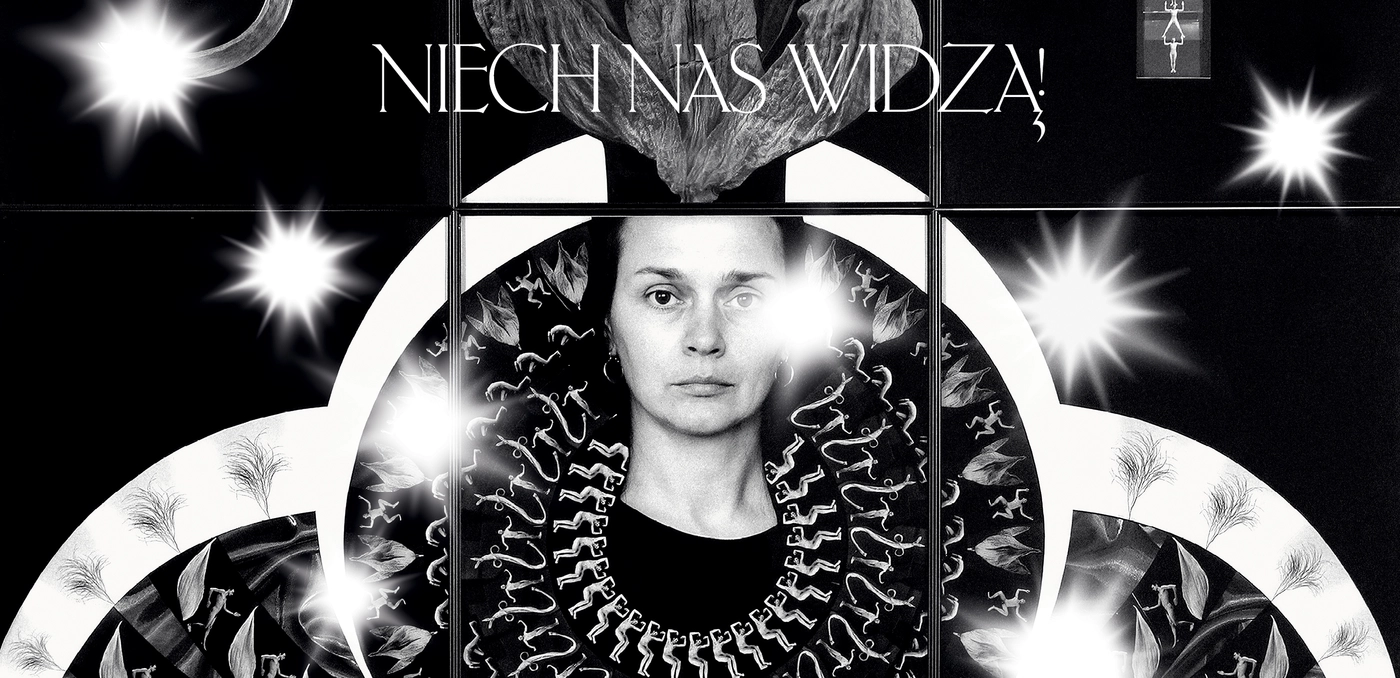
In the halls of the Royal Castle, the official temple of national memory, a quiet but intense dialogue is taking place. The exhibition ‘Let Them See Us: Image, Clothing, Body in Polish Art’ juxtaposes Sarmatian portraits and contemporary installations, 16th-century robes and artistic deconstruction.
This is not just another exhibition about the history of clothing. It is a dense, multi-layered story about a fundamental human desire: the need .to be seen..
The exhibition takes us through centuries of Polish self-presentation. We observe how clothing – from ceremonial armour, through the Sarmatian kontusz, to 19th-century national mourning and contemporary experiments – has been inextricably linked to the body and image.
We can see that clothing has never been just a covering. It has been a message, a manifesto, a shield, and sometimes a disguise. The exhibition shows this process as a conscious ritual of self-creation – an act in which an individual (or a community) uses material to define their position in the world, their belonging or their rebellion.
The title ‘Let them see us’ is key. It is not a passive request, but an active, almost political demand.
What the curators bring to light is a story of intentions. They show that fashion and art were and are tools for managing perception. The exhibition exposes the mechanism: clothing does not so much reflect identity as create it. It is a language through which we negotiate with the world who we are and, more importantly, who we want to be recognised as.
In times when social media did not exist, portraits and clothing were the only forms of conscious image creation. They were a filter imposed on reality, a way of recording a preferred version of oneself in the memory of the world.
This exhibition is a symbolic hall of mirrors. Each portrait, each mannequin, is a mirror in which Polish identity has gazed for centuries, searching for its essence.
Clothing becomes an archetype here – a second skin that preserves memory. Armour becomes a symbol not only of physical strength, but also of mental fortitude. A mourning dress is not just a piece of fabric, it is a ritual of loss worn on the body.
This exhibition is a trace of the nation's ‘skin memory’. It shows how we encoded our fears, aspirations, pride and traumas in the fabric of clothing. It is proof that aesthetics was and is a form of spirituality – a way of expressing what cannot be expressed in words.
The exhibition at the Royal Castle, although steeped in history, poses a radically contemporary question.
We live in an age of total visibility. Our ‘Let them see us’ resonates in every post, in every carefully calibrated frame, in every digital avatar. The desire to be seen has not disappeared; it has become ubiquitous, automated, but perhaps more empty as a result.
When we look at a 16th-century portrait of a nobleman who carefully crafted his image through his attire to ensure his immortality in the memory of posterity, are we not looking at ourselves in the mirror?
It is the same age-old ritual. Only the tools have changed.
Photo: ‘Let them see us! Image, attire, body.’ Source: Royal Castle in Warsaw – Museum, https://www.zamek-krolewski.pl/niech-nas-widza

Get the latest news from the world of fashion - trend analysis, exclusive reports and alerts on key industry events.
🎁 Gift for subscribers!.
No spam, only valuable content! We do not share your data with third parties. By subscribing, you agree with our Privacy Policy.




Add your first comment to this post